Transplant 2035: Advances & Innovations Shaping the Future of Transplant Medicine
A global conversation on the advances and innovations shaping the future of transplant medicine, and what they could mean for care in Africa.
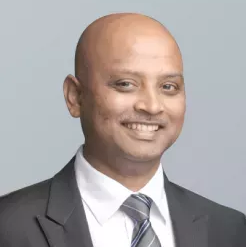
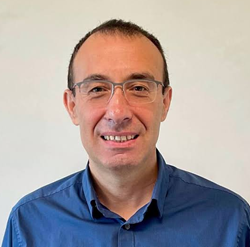
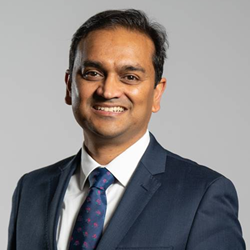
Aster Group of Hospitals, Bengaluru
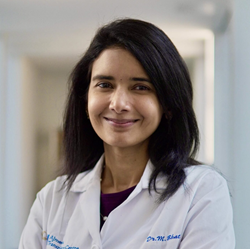
University Health Network, Toronto
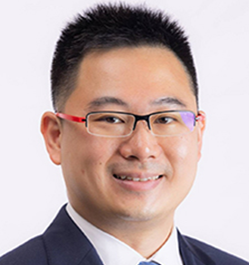
6G AI Centre · NUH Singapore
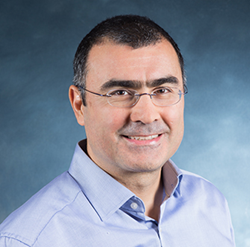
Boston College, USA
Boston College, USA
Wits Donald Gordon Medical Centre
About This Webinar
What happens when world-leading transplant experts, AI pioneers, connectivity innovators and economists whose work helped shape the ideas behind the 2012 Nobel Prize in Economic Sciences come together?
Ideas collide. Narratives shift. Possibilities open up.
This session brought together six of the most innovative global thinkers in transplant medicine for a conversation that crosses disciplines, borders and conventional thinking to ask:
- What happens when Artificial Intelligence meets transplantation?
- When 5G and 6G become an equaliser for access?
- When economics meets organ matching and resource allocation?
- And what if some of the most powerful innovations turn out to be simple, scalable and surprisingly low-tech?
These aren’t just experts talking about the future. These are pioneers helping to make it happen.
Professor Utku Ünver and Professor Tayfun Sönmez, Massachusetts, USA — economists whose pioneering work helped shape the ideas recognised by the 2012 Nobel Prize in Economic Sciences — bring a radically different perspective to transplant medicine, exploring the economics of matching, allocation, incentives and the design of systems.
Professor Yujia Gao, Singapore, is at the forefront of next-generation connectivity, leading work through a 6G AI research centre and long-term roadmap towards 2035. His work explores how connectivity, AI and technologies such as holographic medicine could transform access to expertise and care.
Associate Professor Mamatha Bhat, Toronto, brings the rapidly evolving world of translational medicine and clinical AI into the conversation — exploring what happens when algorithms move from the laboratory into real-world transplant decision-making, and what we can learn from the implementation of these systems.
Dr Sonal Asthana, Bangalore, brings an entirely different lens: how do you innovate when resources are constrained? What can India teach the world about doing more with less? And where are the innovations already reshaping the way care is delivered?
Dr Sharan Rambarran, Johannesburg, brings the conversation back to our own healthcare environment — grounding the discussion in what these global advances could mean for liver transplant practice here in South Africa.
This is not simply a conversation about what technology might look like in 2035. It is a conversation about how medicine, economics, connectivity and human ingenuity could fundamentally change what is possible in transplant care, particularly where resources are limited.
Because the future of transplantation won’t be defined by technology alone. It will be defined by what we do with it.
- Describe current and emerging applications of artificial intelligence in transplant medicine, from clinical decision-support to predictive analytics, and the challenges of moving these tools from research into everyday practice
- Explain how advances in connectivity (5G/6G) can extend access to specialist expertise and advanced care in under-resourced and geographically remote settings
- Understand how economic principles of matching, allocation and system design — including paired exchange — can improve organ access and outcomes
- Evaluate the impact of simple, low-resource innovation on transplant care delivery, drawing on lessons from India and other resource-constrained health systems
- Identify the practical implications of these global innovations for South African and sub-Saharan African transplant practice — distinguishing what is realistically implementable now from what remains aspirational
Meet the Expert Panel
Six panellists across economics, hepatology, AI, connectivity, bioengineering and transplant surgery — spanning five countries and one shared question. Click any card to read the full biography.